

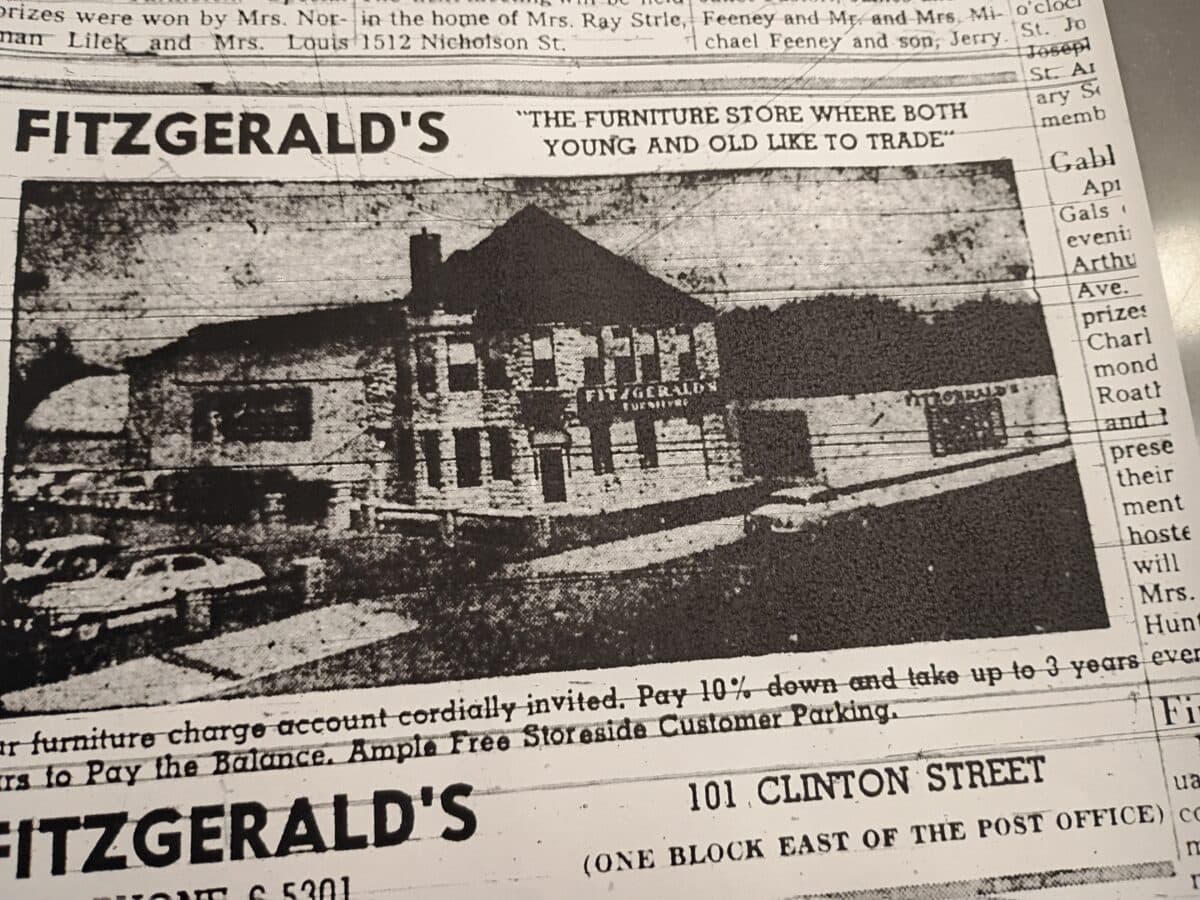
The building on Clinton Street that housed Fitzgerald Furniture was originally the first railroad depot for the Elgin, Joliet and Eastern Railway . It currently houses Joliet Fire Department Station #1.
By Anneta Drilling, local history librarian
Just on the other side of Joliet’s raised train tracks, there is a baseball stadium known, by terms of endearment, as Slammers’ Stadium.
It actually opened as Silver Cross Field on June 6, 2002. It has been known also as the Joliet Route 66 Stadium, DuPage Medical Group Field and now as the Duly Health and Care Field. It was purchased and is owned by the city of Joliet.
The stadium was designed by Sink, Combs and Dethlefs, a Denver-based architecture and planning firm that specialized in sports, recreation and entertainment. Walsh Construction was the general contractor. The cost to build the stadium was $27 million. The stadium seats up to 6,016 people.
Of course, when Silver Cross Field opened in 2002 at 1 Art Schultz Drive, the Jackhammers (now the Slammers) were part of the Northern League. The Slammers are a professional, independent baseball team. They are not a minor league team associated with any particular major league baseball club. They are part of the National Frontier League now.
A lot has been changed by baseball in Joliet.
Let’s take a brief look at what was where the stadium is now, and how the stadium changed the look of that area forever.
Railroad tracks everywhere
Let’s start by thinking back to East Jefferson Street and the area before Union Station was built and the tracks were raised circa 1912.
Before that rain tracks were everywhere running through the city of Joliet. There were six railway companies running through Joliet. Each had their own set of tracks and their own depots. There weren’t quite as many buildings as there are now. However, this transportation hub meant that the typical streets were not terribly safe. There were cars, bicycles, pedestrians, horses, horses with wagons, vehicles, no stop lights and no signs, and in the middle of all that you put train tracks. Yikes!
By the twentieth century, the situation became completely unsustainable. At the insistence of the city, the railroads launched a $2 million joint engineering project between 1908 and 1912. Workers physically raised the rail lines onto concrete embankments, rerouted industrial freight yards out of the immediate downtown, and unified passenger traffic into a single, elevated Union Station Terminal.
Slammers Stadium has boundaries of Power Alley to the east, Jefferson Street to the south, Michigan Street (Mayer Art Schultz Drive) to the west and Clinton Street to the north. But what was in that space before the baseball field was there?
Power Alley and the Stadium Club
Before it was renamed Power Alley, the small downtown Joliet side street was simply an unnamed city alleyway.
The city of Joliet formally named it “Power Alley” as a baseball-themed play on words when Silver Cross Field was constructed adjacent to it. In baseball terminology, a “power alley” is the area of the outfield between the outfielders where power hitters often hit the ball.
The three-story building at 141 E. Jefferson St. (known as the Stadium Club building) was originally home to an American Motors Corporation (AMC) car dealership during the 20th century.
The City of Joliet acquired the property in 2002 to clear land for the construction of the adjacent baseball stadium. City workers originally gave the vacant dealership its “Stadium Club” nickname in jest while using the structure for city storage.
Cornerstone Services announced the opening of its new Behavioral Health Clinic at its Van Buren Street offices (134 E. Van Buren St.) in June 2026.
Urban renewal in downtown Joliet
The property near the Slammers Stadium had its own history early on. In that area on the south side of Jefferson Street was the Nicholas Hotel or the New Nicholas Hotel. It was torn down years before the stadium was ever thought of. One of the Masonic Temples was across the street, right where the stadium stands today. It was also torn down long before the stadium was ever thought of.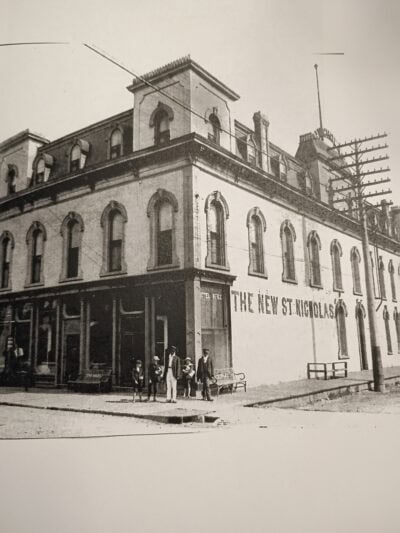
The first railroad depot for the Elgin, Joliet and Eastern Railway was on Clinton Street. It later became Fitzgerald Furniture from 1956-1986, and currently houses Joliet Fire Department Station #1.
The Stadium Club Building used to be a Cadillac-Oldsmobile dealership on the corner of the alley and Jefferson Street. The stories I’ve heard say this was a three-story showroom. If someone wanted to purchase one of the cars, it was brought to the first floor by elevator. Now it’s being used for storage for the city of Joliet.
The Boys and Girls Club is still there on Eastern Avenue, across from the Joliet Township High School Central Campus that was built in 1901. These buildings are still in the surrounding area.
At some point on Jefferson Street, there was a Kosacks Formal Wear, Batis & Associates Real Estate office, All American Golf Sales, Willy World Yamaha, Cornerstone Services and Standard Shuttle Service. Earl Scheid owned an auto painting company. Rendell’s Auto Body was there. Clinton Street boasted Supreme Radiator and Auto Body. When these businesses moved, they left old buildings that had no use.
When the city of Joliet decided to build a stadium in the downtown area, there were still some of the old buildings left. The few businesses that were left in that area could find other locations or make other plans. As far as urban renewal goes, it was a great idea. It was another chance for a part of downtown Joliet to start anew.